Four comparisons bring the reader specifications into view. The figures keep published values, calculated comparisons and configuration limits distinct; the data tables retain the numbers and conditions behind each plot.
Fluorescein detection limits: printed and committed figures
The sensitivity rows compare headline numbers, and four instruments print a headline far better than the figure they commit to in their own manuals. This chart puts the two side by side.
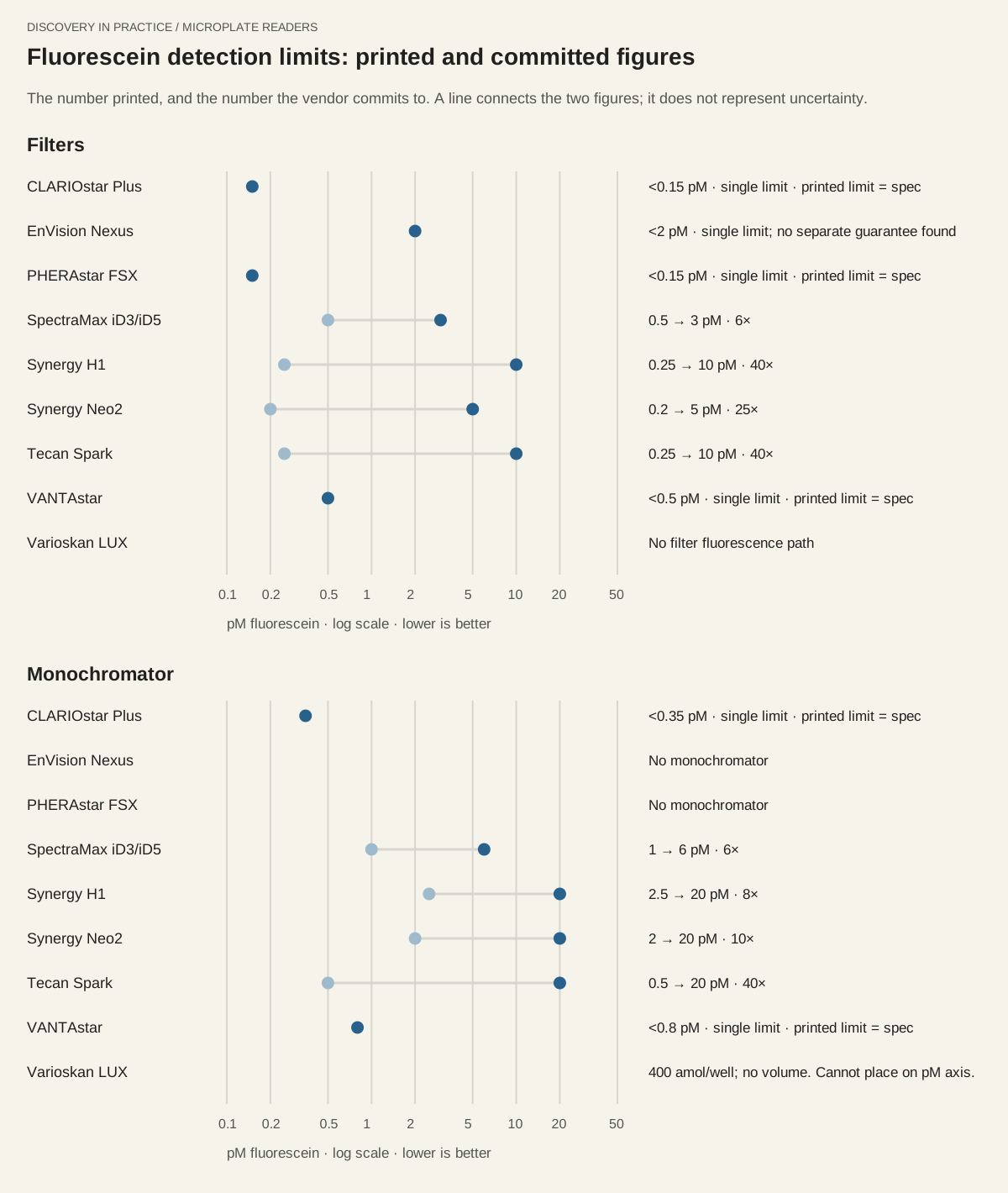
| Reader | Filters: printed pM | Filters: committed pM | Mono: printed pM | Mono: committed pM | Basis |
|---|---|---|---|---|---|
| CLARIOstar Plus | 0.15 | — | 0.35 | — | “<” limits, 384sv, 20 µL |
| EnVision Nexus | 2 | — | — | — | Spec sheet “<” limit; no separate guarantee found; no monochromator |
| PHERAstar FSX | 0.15 | — | — | — | “<” limit; no monochromator |
| SpectraMax iD3/iD5 | 0.5 | 3 | 1 | 6 | Optimized vs guaranteed, 384-well (filters iD5 only) |
| Synergy H1 | 0.25 | 10 | 2.5 | 20 | Data sheet (384) vs manual guarantee (96-well) |
| Synergy Neo2 | 0.2 | 5 | 2 | 20 | Data sheet averages vs manual Rev B (2016) App. A; provisional pending a newer manual |
| Tecan Spark | 0.25 | 10 | 0.5 | 20 | Brochure factory averages vs Reference Guide (2024) pp. 190, 196; standard module, 384, 100 µL |
| VANTAstar | 0.5 | — | 0.8 | — | “<” limits, 384sv, 20 µL |
| Varioskan LUX | — | — | — | — | No filter FI; monochromator 400 amol/well with no volume |
Luminescence: committed figure versus printed headline
The same question for luminescence. Glow and flash figures can’t share an axis, so each vendor is compared only with itself, same chemistry and plate.
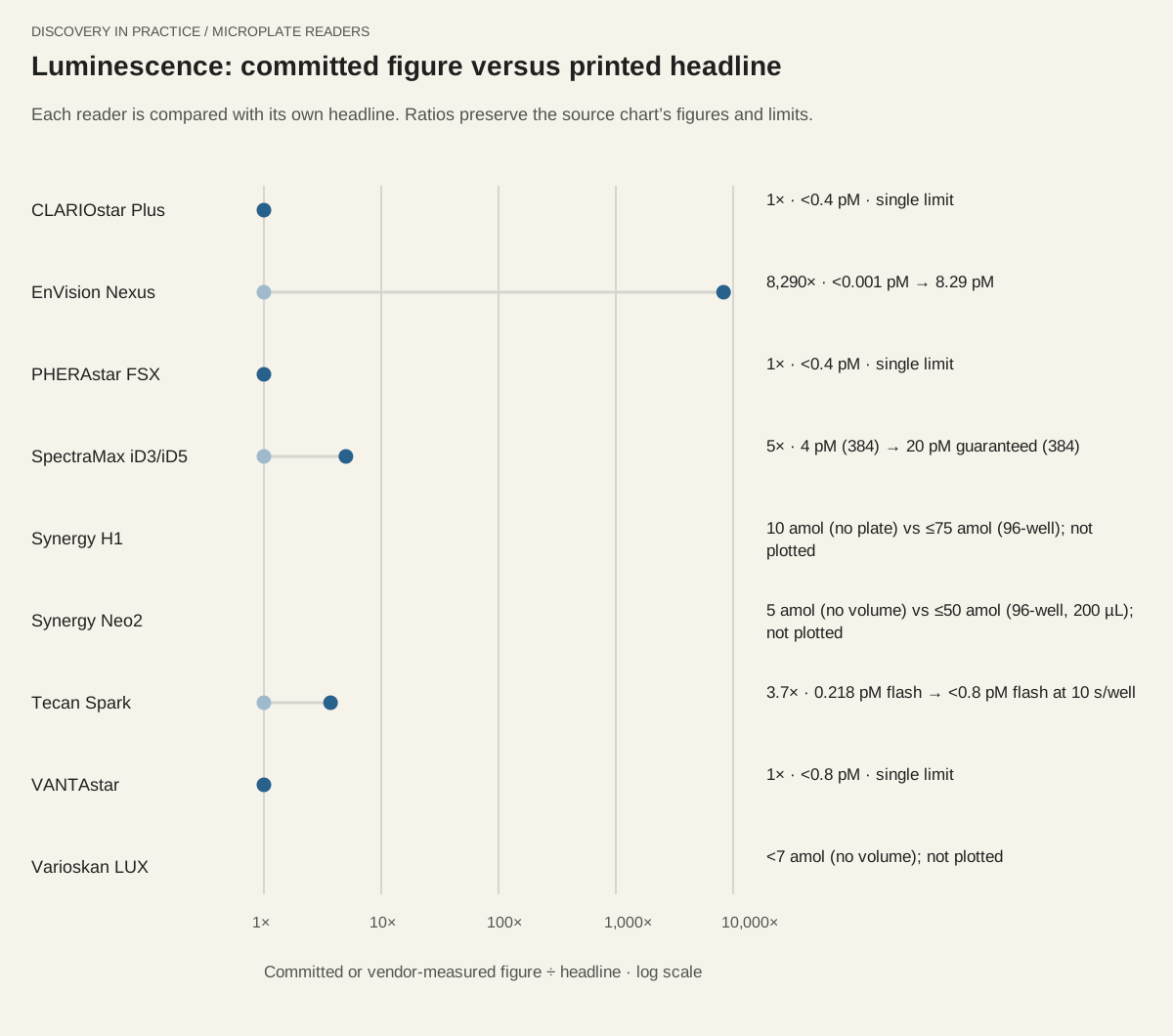
| Reader | Headline | Committed or vendor-measured | Ratio | Basis |
|---|---|---|---|---|
| CLARIOstar Plus | <0.4 pM | — | 1 | One “<” limit, flash ATP, 384sv, 20 µL |
| EnVision Nexus | <0.001 pM | 8.29 pM | 8290 | Spec sheet 947574 vs Revvity technical note (2025), Ultra-sensitive, same kit/plate/volume, 1 s |
| PHERAstar FSX | <0.4 pM | — | 1 | One “<” limit, flash ATP, 384sv, 20 µL |
| SpectraMax iD3/iD5 | 4 pM (384) | 20 pM guaranteed (384) | 5 | Live spec page vs user guide Tables A-6/A-7, ATPlite |
| Synergy H1 | 10 amol (no plate) | ≤75 amol (96-well) | n/a | Headline names no plate |
| Synergy Neo2 | 5 amol (no volume) | ≤50 amol (96-well, 200 µL) | n/a | Different plates; volume of the headline not stated |
| Tecan Spark | 0.218 pM flash | <0.8 pM flash at 10 s/well | 3.7 | Spec sheet 2015 (ENLITEN, 384, 55 µL) vs Reference Guide v2.2 §9.7.2 (384, 100 µL) |
| VANTAstar | <0.8 pM | — | 1 | One “<” limit, 384sv, 20 µL |
| Varioskan LUX | <7 amol (no volume) | — | n/a | One figure, no volume |
Reading both colors of a 384-well ratio assay
One detector reads the two colors of a ratio assay in turn. The second color is a second pass, and no vendor prints that time.
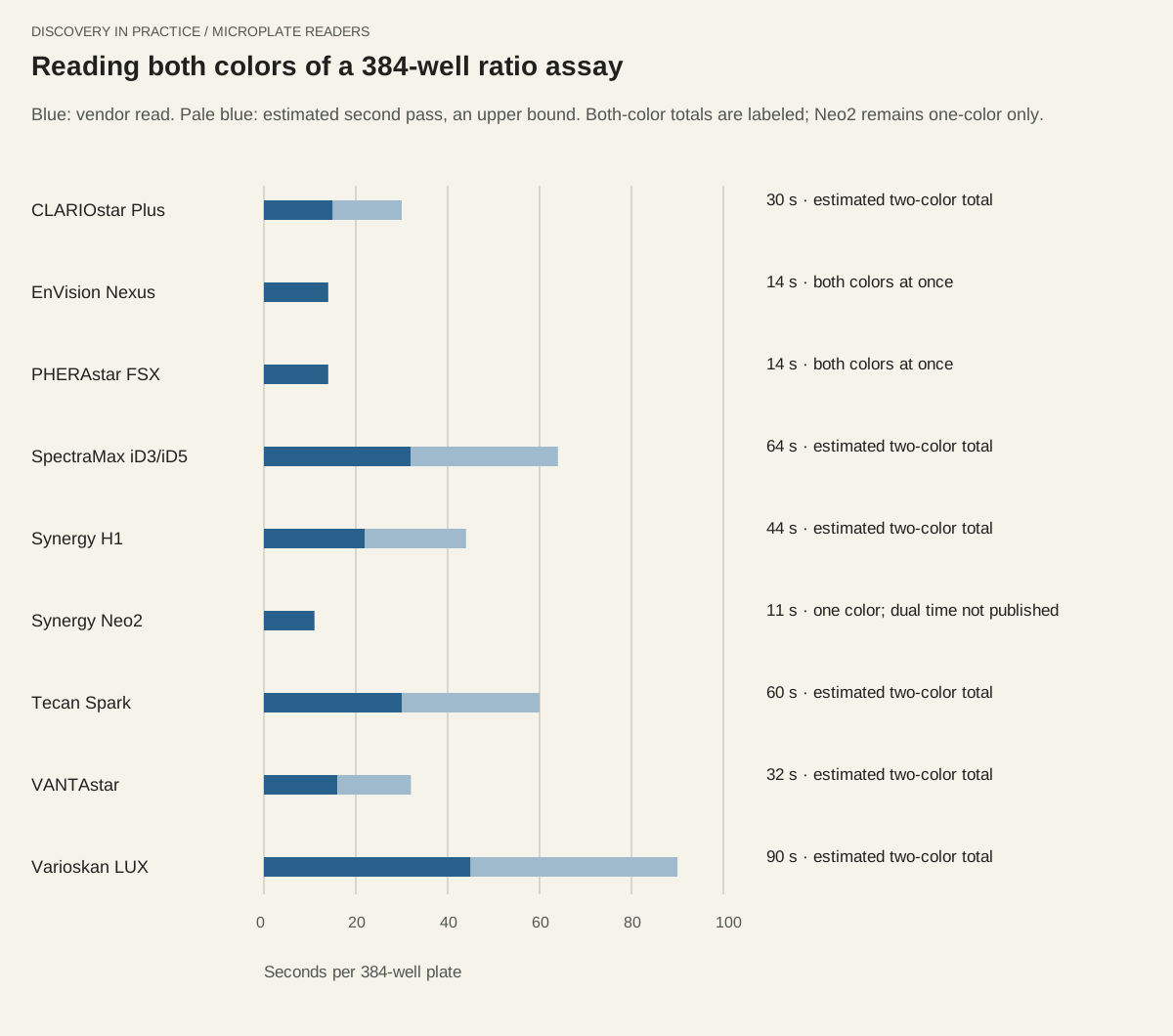
| Reader | First color, s (vendor) | Second color, s (estimated) | Total, s | Basis |
|---|---|---|---|---|
| CLARIOstar Plus | 15 | 15 | 30 | Flying, 1 flash; second color estimated |
| EnVision Nexus | 14 | 0 | 14 | On the fly, dual-channel module, both colors at once |
| PHERAstar FSX | 14 | 0 | 14 | Flying mode, 1 flash, simultaneous dual emission |
| SpectraMax iD3/iD5 | 32 | 32 | 64 | “Using lowest setting”; second color estimated |
| Synergy H1 | 22 | 22 | 44 | Kinetic figure, no flash count; second color estimated |
| Synergy Neo2 | 11 | not published | 11 | Sweep mode, one color; dual time not published |
| Tecan Spark | 30 | 30 | 60 | Spark Cyto brochure ≤30 s, 384, one flash; second color estimated |
| VANTAstar | 16 | 16 | 32 | Flying, 1 flash; second color estimated |
| Varioskan LUX | 45 | 45 | 90 | Minimum time, one flash; second color estimated |
Coldest setpoint in a 22 °C laboratory
Temperature-sensitive assays (Alpha, glow luminescence, enzyme kinetics) run at whatever temperature the reader settles at. Only readers that can cool get below the room.
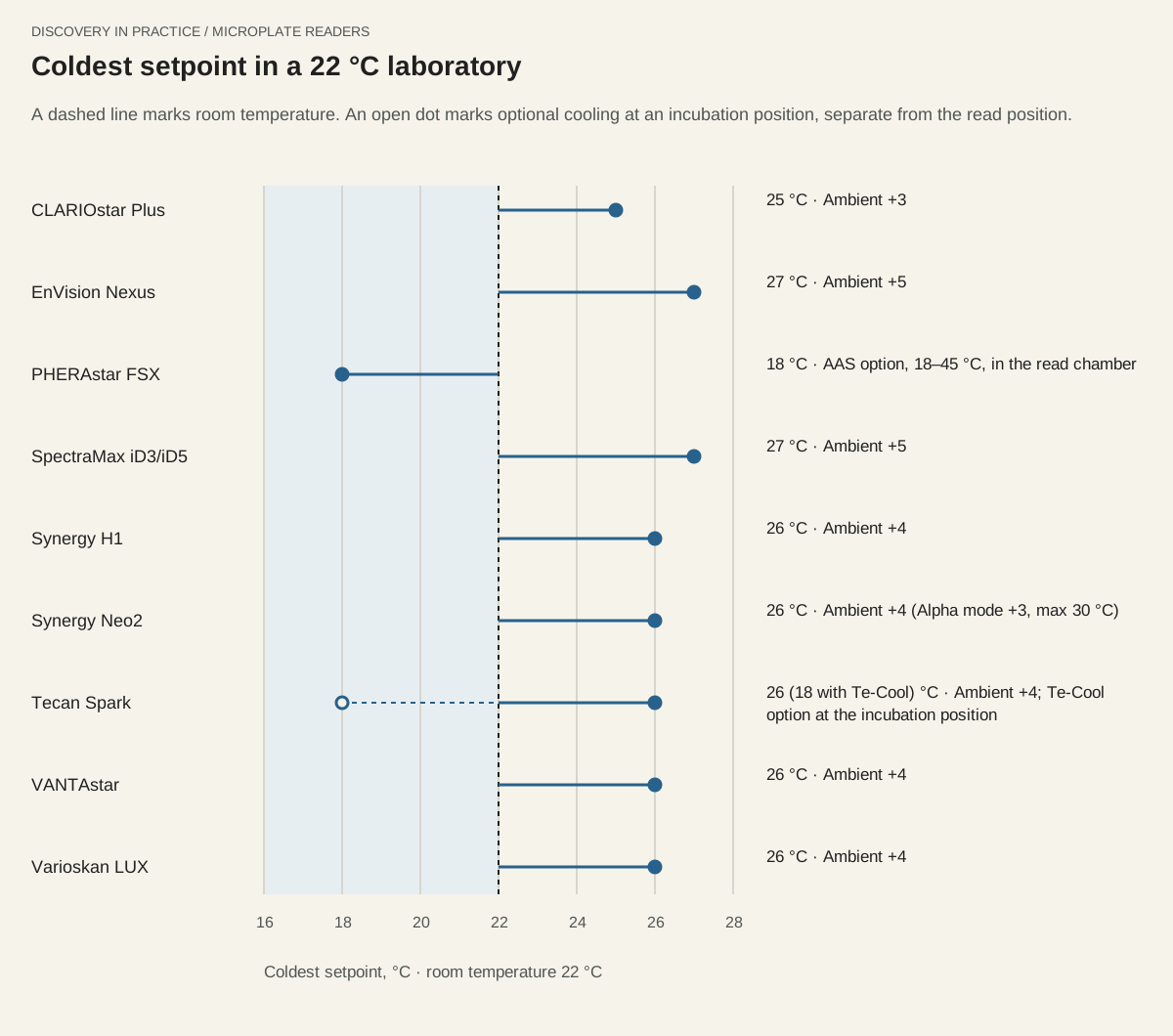
| Reader | Coldest setpoint in a 22 °C lab, °C | Basis |
|---|---|---|
| CLARIOstar Plus | 25 | Ambient +3 |
| EnVision Nexus | 27 | Ambient +5 |
| PHERAstar FSX | 18 | AAS option, 18–45 °C, in the read chamber |
| SpectraMax iD3/iD5 | 27 | Ambient +5 |
| Synergy H1 | 26 | Ambient +4 |
| Synergy Neo2 | 26 | Ambient +4 (Alpha mode +3, max 30 °C) |
| Tecan Spark | 26 (18 with Te-Cool) | Ambient +4; Te-Cool option at the incubation position |
| VANTAstar | 26 | Ambient +4 |
| Varioskan LUX | 26 | Ambient +4 |
Sources
The comparison source library identifies the vendor documents, editions and availability notes. Each chart and data table retains its specific measurement basis.